Friday, January 13, 2012

Secrets Don't Make Friends

Wouldn't Want To Be Them

The case studies presented in this week’s readings cover such a broad range of ethical situations that it’s clear there is not really any right answer to these daunting questions. It has also shown me how tough it is to be a judge. If I were presented with a situation where I had to decide whether or not release secret information, I would certainly have to weigh the factors we have discussed in class and read in the text. That may seem like the easy answer, but the truth is, one can’t know until that unique situation.
 
One of the case studies that stood out the most to me was the one on page 47 of “Media Ethics.” A reporter is presented with a tape that shows a murder suspect speaking to his lawyer. The act of filming the confidential exchange was illegal. So when the government came asking for the source, the reporter would not give them up because of her right to keep her source confidential. So they then targeted her husband, who drove her to the exchange in order to find the information.
 
This is a worst-case scenario. Not only was the reporter faced with the extremely difficult decision of using the confidential information in the video, but then her husband was targeted because he was helping her. Since he wasn’t a reporter, logically that would make one think he is fair game to force his cooperation. But do we really want that woman wandering into a stranger’s house alone with no support? No.  If I were the reporter in this situation, I probably would act just as she did. She didn’t release the law-breaking recording, which allowed for the suspect to have a fair trial. But the attempt to flush out the source seems to go a bit far. The husband was acting as personal security. I side with the reporters on this one.
 
In my current position, which doesn’t call for any type of boundary pushing, my criterion for keeping information secret is fairly simple. If releasing the information would put my family, friends or me in any type of danger, either physically or emotionally, I wouldn’t do it.  I hope to never be in a position where things get more complicated. When I think of a situation like Wikileaks, my outside opinion is always to side with our government. There is obviously corruption and wrongdoing that goes on, but I’d rather enemy groups didn’t know about it.
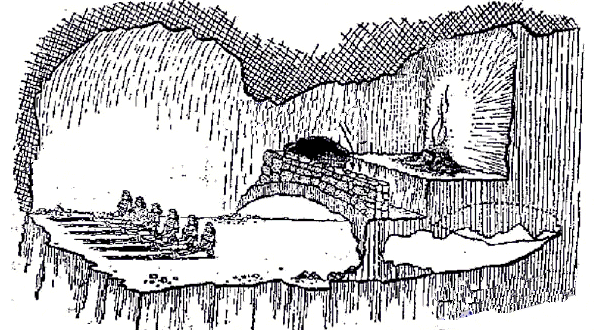
 
Plato's Cave
The fallout from releasing once secret information can be seen on a daily basis. It seems like this year has had more scandal than others I can remember. Or maybe I’m just paying attention more. When controversial secret information comes out, the backlash is complete media immersion. If the topic is somehow sports related, all sports outlets drop everything and talk about it. The same goes for entertainment and those outlets. I often wonder if these situations hinder the process of selecting an unbiased jury. So this must be considered when an individual intends to expose something. Passing on a rumor could completely ruin someone’s life.


Photo Credits: 
http://img.tgdaily.com/sites/default/files/stock/450teaser/gavel.jpg
http://webspace.ship.edu/cgboer/PlatosCave.gif)

Thursday, January 5, 2012

Gossip Ethics

Potential Scenario
In a potential career as an entertainment journalist/film critic there is one fundamental type of news that I believe to be a large ethical dilemma. The concept of right to privacy has all but disappeared as entertainment news is now gossip. I am a fan of news regarding upcoming film releases, actors signing on to projects, and award show buzz. The problem comes with the lower end “news.” TMZ has been in the forefront of this deep-seeded love for rumors that don’t need to be based in actual reality. Are celebrities real people? I would hope so. Therefore people shouldn’t dig up any irrelevant detail about their private life and plaster it all over the internet.

However, this kind of information sells. Drama regarding Kim Kardashian or Charlie Sheen makes its way into actual newspapers and magazines because people are intrigued and interested. But Kardashian’s circus wedding put her relationship in the spotlight to begin with, so she isn’t without blame. It’s obvious I have a personal opinion, but that may change if I were in a situation where printing this could help a company I worked for.

In regard to our course and potential topics to be discussed, I would like to address this rumor dilemma. Why is this the best-selling news and how should educated individuals approach it? I used to just write off everything I saw on the “gossip rags.” But somehow these unsubstantiated claims often turn it to be correct. Is getting the scoop more important than strong sources and double checking for truthfulness?

Ethical Tools
I initially thought that I had a strong ethical foundation, but it appears that it is more of a moral foundation. This is a great tool to have and it has helped me a lot in my life so far. I will have to wait and see if the lines get a little more blurred through further ethical discussion and a potential job where I have an obligation to more than my family and myself. From this week’s readings I found Aristotle’s “Golden Mean” theory to be the most interesting. I’ve essentially been living unknowingly by this model for a long time, but to see it written out adds a more detailed perspective. The other theories are helpful, but Aristotle has the only one listed where I can base my decisions on what is considered to be acceptable.

In the chart provided on page 9 of “Media Ethics,” it shows bravery sitting between cowardice and foolhardiness as the acceptable behavior of the three. However, the subjective interpretation of these terms would cause some people to engage in the other two. The example I think of is with the X-Games. The majority of people would consider doing no-handed backflips on a motorcycle as foolhardy. I would agree with that. However, this entire brand has been built by people interpreting these actions as brave. It really forces one to think deeply about whether or not their actions and thoughts are based in reality. This may not be an ethical choice, but it can certainly be applied to interactions of that sort.


Friday, December 2, 2011

Full Disclosure

Regal Entertainment Group's strategies for reaching investors lie mainly with their website. Questions can be asked with an online form that will be returned with a specific answer or the location to which that information could be found on the site. Then there are the traditional press releases and quarterly conference calls that are common with publicly traded companies. In order to stay connected with the community, Regal has the Regal Foundation. They work with well-established philanthropic groups in the community’s where their theaters are. Like I’ve said in previous posts, this group apparently does a lot working with the important groups like Boys and Girls Clubs, but this involvement is hardly seen on a daily basis. Though they do have a fairly impressive write-up on their website for all the good they do through this effort. They of course have Twitter to communicate with fans, as well, though they could probably do more in terms of customer service.

One of the government bodies they work most closely with is the Motion Picture Association of America (MPAA,) which rates films and enforces theaters use of those age guidelines. Also Regal communicates with the National Association of Theatre Owners (NATO) and the Inter-Society Digital Cinema Forum to make sure their theaters present a number of open captioned and descriptive video options for hearing and visually impaired viewers. Then there is the Department of Health who deal with the concessions stands in individual cities. The communications with these groups are mandatory so they regulate the interactions. The corporate office is likely the place which meets with such groups.

I think Regal needs to expand their outreach to all individuals. They are a specified company, but in the face of a crisis, being a well-known brand would potentially help gain favor with the public. Keeping up frequent communications with government agencies would be a good first step so that minor infractions wouldn’t occur that might hurt the brand. With the evolving look Regal always utilizes with their new theaters, the best solution for dealing with a crisis would be to take advantage of that constant change. Another approach could be to upgrade the other brands under the Regal label. United Artist Theaters and Edwards Theatres are both owned by Regal. So if a crisis came out for any of the brands, another could increase its exposure to fill the void.

The most important strategy for any crisis is full exposure and immediately addressing issues. If we’ve learned anything with the tons of scandals in the news lately it’s that sitting on a crisis will only make it worse. Fixing the problem followed by immediate efforts to improve the image is essential. Since Regal has their foundation in place, I imagine they would emphasize its existence much more if a question were raised about the company’s character. It almost seems that firing the executives is the general perception of how to handle a crisis. But a lot of time the public and media are just looking for full disclosure and transparency.

Friday, November 25, 2011

Internal Regal

As far as I can tell by researching Regal from an outsider’s perspective, they have little in the way of internal publications. Of course since I don’t work for the company I may be incorrect. As is common procedure, they release stock reports for stockholders. Those contain some information regarding the company’s gains, plans, etc. As I have said in previous posts, I don’t think a blog would necessarily be appropriate for a company like Regal. While they spend plenty of time and effort on their theaters, the general public isn’t overly concerned with the goings on of a movie theater chain, though an internal blog could be a different story.

Since I’ve witnessed many people asking theater employees about a current or upcoming film, it may be beneficial to give some information about them in an organized manner. Allowing free screenings would probably be too much, but some official information, links to videos with the actors and director, could help. This would give credibility to what the guy selling popcorn at the concession stand thinks about “The Muppets.” As of now it’s completely riddled with bias and half-truths they gained on their own.  If they had some official information released to them they could point to an anecdote by the director or give a more optimistic and truthful response.

In reality this type of blog or newsletter could be open to the public as well. It could build anticipation for a certain film, which would bring people to the theaters. However, it may not be worth paying for the rights to the brands and titles when studios are already spending a fortune on advertising. It would be more appropriate for funds to go directly into the theaters. The current external newsletter used by Regal, “the show time newsletter,” provides the times movies are playing that week and an occasional promotion. It doesn’t offer much more information.

While Regal uses popular characters from current films on their website to promote those movies, they do not have a celebrity spokesperson. I have seen other theater chains use an on-screen personality for the segments they air before the movies begin. Bow-Tie Theaters, for example, use a man who talks about upcoming movies and name drops the theater group every few seconds. Regal has a narrator for this. It wouldn’t hurt to have a known celebrity for this task. But again, that’s spending money that may not be necessary. Celebrities alienate certain people depending on their personalities. Regal seems to always go with the option of letting their product (movie theaters) speak for themselves.

If I were to pick someone appropriate to be a celebrity spokesman, they would have to be credible in the film industry. There was once a limited time video shown at Regal where Martin Scorsese enters a real life moment and begins directing the people. The point was they don’t interrupt your life, so don’t interrupt their movies. I noticed it was met with positive responses from most. Someone like Scorsese would fit well in a role for the theater chain. But he would probably only do it for a small fortune.

Friday, November 18, 2011

Corporate vs. Commercial

Regal Entertainment Group uses a two-fold media relations strategy. As to which aspect is approached as the top priority, I can’t be sure. The corporate side of the company is based around keeping a clean image in the minds of stockholders. As a publicly traded company, there must always be a concern with how they appear in terms of growth potential and stability. So on the Regal website there are many official statements and investor reports, which provide the appropriate information. This content keeps with standards of a more traditional media strategy.
 
Then there is the opposite side of the coin for the average Joe moviegoer. Easier to find and more direct, the content related to upcoming movies and discounts and promotions is very prevalent throughout the site. An interesting thought may be that Regal thinks investors have more time or patience to go digging through the site to find their content, while the common folk need flashy promos on the homepage to navigate around. I may be way off with that guess but the way the content is displayed is quite different.
 
In addition to the short bursts of information on the site, there is the possibly even more instant media of Facebook and Twitter. As I said in my previous post, their Twitter has more of a customer service presence than their Facebook does. I find that variation in content present on Twitter as more appealing to the varying demographics who potentially view it. But since Facebook has more of an adult presence on it, Regal should consider direct communications with fans through that outlet.
 
Regal Entertainment’s branding proves to be vital in both methods of the company’s media relations. While there are a number of theaters that are small, Regal boasts of a vast number of large cinemas. This example appeals to the average person who would rather experience a movie on a large screen with more seats, as well as the stockholder who sees sustainability and growth in the company.  
 
The methods employed by Regal are a successful conglomerate of new and old media relations techniques. They are not afraid to use Twitter, which states non-controversial opinions of movie news topics as a representation of their company. It may not appeal to a TV news anchor in this format, but the fact that Regal’s crown symbol appears in thousands of people’s Twitter feeds every few hours means that they are reminded of the company. Then when it’s time to go to the movies the brand is right there in your mind. This is especially true for the 18-35 demographic, which is more likely to go to the movies and bring friends along.
 
I think the media strategy could be improved through a more thorough use of Facebook. Also it may be more efficient to provide a space intended only for stockholders. Currently they have to navigate through free popcorn coupons and “Happy Feet” movie promotions. If someone is interested strictly in the business side of Regal this may be inconvenient.

Friday, November 11, 2011

Spreading the Word

Running a chain of movie theaters is likely as stressful as running any other type of business. One thing they do have going for them however is promoting their brand using characters from popular movies. This case of social bookmarking likely brings in searches in regard to those separate brands. For instance, Regal's homepage features a number of characters currently in theaters and without needing to gain permission from the movie studio. A car company, for example, wouldn't have the same luxury.


The content inventory for Regal Cinemas is split between informative content and promotional material. Taking content inventory reveals a strong focus on showing what their brand has to offer including their Crown Club, RPX and IMAX theaters. From there the emphasis turns to promotion in regard to their theaters, as well as the movies that will be featured there. With how popular it is expected to be, I cannot imagine that it hurts to put an image of the stars of “Twilight: Breaking Dawn” next to your company name. Regal spares no expense in filling a number of site pages with coupons and discounts for concessions and an occasional movie ticket.


The theater group has joined the social networking party by expanding to Facebook, Twitter and Youtube. Their Facebook page is mostly promotional content with coupons, news of their events and contests. They post approximately twice daily and usually link to new movie trailers or breaking news in the film industry. Their Twitter page is more user friendly. It is clear they use this outlet to not only mention the promotions and such, but also interact with fans and customers. For example, one of the most recent tweets has Regal responding to a customer who couldn’t get a question answered by calling her local Regal theater. With about five tweets daily, Twitter seems to be their go to social media tool for customer interaction. Regal also operates a Youtube page, though that is almost completely movie trailers.


Facebook and Twitter encompass many elements of social networking including micro-blogging. Those few sentence status updates or wall posts provide the information that could be otherwise expressed through a third party blog. In regard to full blog posts, like the one you’re reading, Regal Cinemas steers away from that outlet. Also, since the movies do a lot of the work to get people into the theaters, incentives are more important than listing a lot of written content.


Regal Entertainment Group is a large corporation dealing with entertainment. The fact that they have embraced social networking and use mostly short concise items on their website says that they are looking to draw in potential customers who are just passing through and keep those who have already discovered their brand. While people of all ages go to the movies, there are quite a few movies targeted for the teen demographic. With this in mind, Facebook and Twitter are a must. Overall Regal does well with managing their content to best represent their product, successful movie theaters.

Friday, November 4, 2011

The Crown

Regal’s overall branding model is consistent with their name in size and scope. However, the jury is still out on whether the locationas are actually fit for kings. Their theaters often appear in the form of large multiplexes averaging over 12 screens. There is an apparent interest in keeping with traditional movie theater elements, though they have been distinctly upgraded. Large marquees in lobbies are now almost exclusively digital. I’m sure some miss the traditional marquee, but that’s the way cinemas are headed.


As far as I’m concerned movie theaters do not have any other responsibilities beyond providing a clean, safe and welcoming environment to watch movies. That’s why I am surprised to learn that Regal Cinemas has a foundation, which gives back to the communities that house their theaters through donations to groups like the Boys & Girls Clubs of America. I have never seen the impact of this organization. That would be a great point to emphasize in order to brand the company as socially aware. Maybe the executives are actually trying to make a difference without receiving something in return.

Like many other businesses, Regal Entertainment Group has a logo for any situation. Following that is a laundry list of regulations on the usage of those symbols. If I’m not in class on Tuesday please come bail me out of jail for using the Regal Cinemas symbol in my post. Can you guess what that thing in the circle is? I thought it was a strange popcorn kernel for years, but staring at it for 20 minutes has told me that it is a crown. How regal.


Now that I’ve had this revelation, the group’s Crown Club Card makes a lot more sense. The points based system gives incentives to frequent moviegoers. It’s nothing that hasn’t been seen before, free sodas, discount candy and the holy grail of theater rewards, the free movie ticket (some restrictions apply, of course). This is a powerful strategy to keep fans happy. Ticket prices are expensive at most theaters so anything that is “free” surely is appreciated. They obviously know that those who get the free popcorn will buy a drink to accompany it. But I never do. That’s my way of sticking it to the man. I wonder if they feel that burn in their potentially deep pockets.

Since Regal Entertainment group must balance their branding between the common people who go to the movies and fickle stockholders they don’t seem to have much gimmicky advertising. Plus, in the mid-sized markets that the theaters are located in, there is the potential that lack of competition will usually bring in customers. From an outsider’s perspective the company is successful at branding themselves as a modern movie theater chain that is up to date with the latest technologies.